
Thinking About Comprehension
In this brief video, Nancy Hennessy shares insights into the elements of comprehension and how educators can facilitate comprehension for students through Structured Literacy instruction.
While Ministry-approved early reading screening tools may not measure comprehension directly, we learn a lot about students’ comprehension with the Oral Reading Fluency subtest. Learn more in this brief video!
On the recommendation of the Ontario Human Rights Commission, Ontario will be starting early reading screening in Fall 2024. This webinar clarifies the important role principals play in screening: the who, what, when, why, and how of early reading screening – and, most importantly, how we can use these data to improve student outcomes.
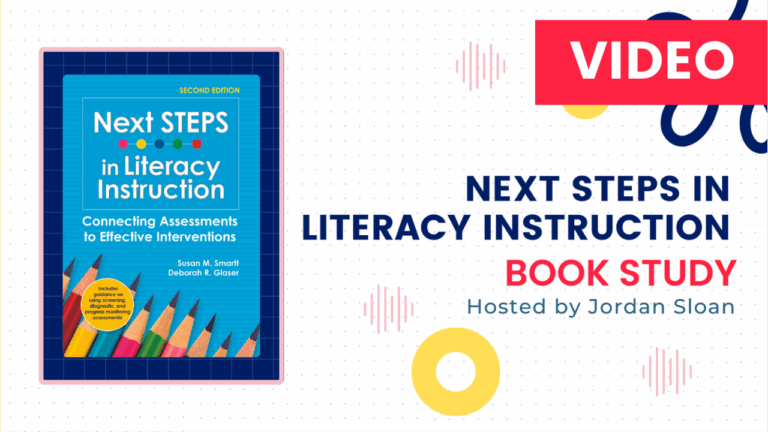
Keen to learn more about using assessment to drive structured literacy in your classroom? Catch up with our Next STEPS Summer Book Study. Resources related to this ONlit event series, hosted by Jordan Sloan, can be found here. Each session in the series tackles a foundational reading skill, unpacking what it is, why it’s necessary for…
Dr. Michèle Minor-Corriveau présente les facteurs à considérer lorsqu’on intervient pour développer les habiletés de conscience phonologique chez les élèves aux cycles moyen et intermédiaire.
Découvrez notre série de courtes vidéos dédiées à Acadience Reading Français avec Alain Desrochers, professeur titulaire à l’Université d’Ottawa. Ces vidéos détaillées apportent une définition du dépistage universel et son utilité dans le guidage des interventions préventives ou ré éducatives. Un cadre d’analyse est proposé pour évaluer les caractéristiques d’une instrumentation servant au dépistage et…
Grammar on the Go is a playlist of some foundational grammar concepts covered in the new Ontario Language Arts Curriculum (2003) for Grades 1-9. The video series focuses on nouns (common, proper, singular, plural), verbs (past, present, future, progressive, perfect tenses), pronouns (first person, second person, third person), gerunds, adjectives (common, proper, comparative, superlative, pronoun…
Vocabulary knowledge must be intentionally nurtured to ensure that students are ready for the greater vocabulary demands of reading complex texts and writing multi-paragraph essays, but we need to pay attention to cracks in the foundation and scaffold our lessons accordingly, or it all falls apart. This workshop equips participants to consider the role of…
In this series of videos, Dr. Andrea Fraser highlights key considerations for school boards and districts as they move to evidence-based assessment and data-based decision-making.
Missed the ONlit Syntax Party with Dr. Margie Gillis? Catch up with the recordings – learn about why syntax is necessary for skilled reading and writing, and how to best teach this important language domain.
In this video, Dr. Anita Archer models an explicit vocabulary lesson with older students. Note how Dr. Archer involves active participation: students are engaged throughout. Note also the high level of teacher-student interaction. See if you can count the number of « serve and return » interactions!
In these webinar recordings, Jordan Sloan, Melissa Monette Smith, Siobhain Doyle, and Laura Bross explore assessment, evaluation, and reporting in the context of the revised Language curriculum and the new one-mark report card structure for Ontario students.