-
-
Fluency in Perspective: Grade 6
This is a collection of passages designed to be used for fluency instruction in grade 6. The passages are purposefully written to flexibly support a variety of different instructional routines (Quick Fluency Routine, repeated reading, partner reading/paragraph shrinking).
-
Purposeful Play, Intentional Talk: Inclusive Oral Language Practices for Kindergarten – Recording
Hosted by Angeline Humber and Melinda Hinch, this webinar supports kindergarten educators in providing play-based instruction to develop language skills. Angeline and Melinda highlight effective practices particularly well-suited for students who are multilingual learners, or who may have Developmental Language Disorder or language delays. Together, they explore: The session pairs joyful classroom practice with explicit…
-
Implementing Structured Literacy In the Classroom: Part 2: Moving to print
This webinar is the first in a 3-part series hosted by IDA Ontario. In this webinar, Emily Moorhead demonstrates and discusses ways to support young learners as they begin to use letters to blend and segment for reading and spelling. She models how this leap from oral to print can be explicitly taught, guided, and…
-
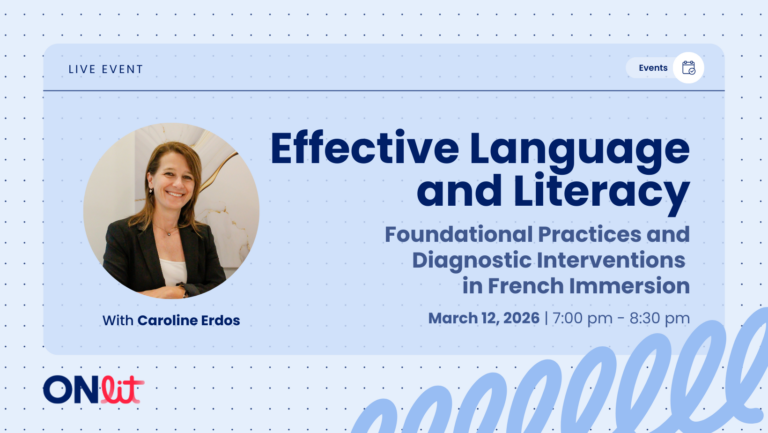
Effective Language and Literacy: Diagnostic Interventions in French Immersion – Recording and Slides
This presentation focused on the essential practices and interventions needed to support effective language and literacy development for students in French Immersion programs. It began by establishing a foundation of high-leverage language and literacy practices that support successful learning. The presentation then addressed evidence-based screening, assessment, and intervention practices tailored to the French Immersion context….
-
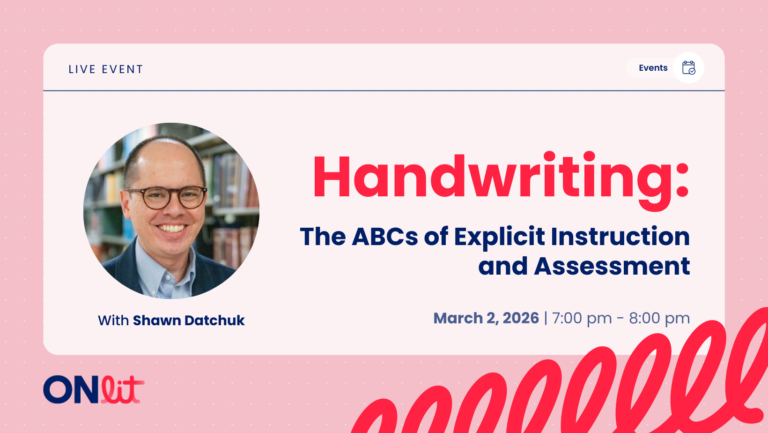
Handwriting: The ABCs of Explicit Instruction and Assessment -Recording
This webinar was hosted by Dr. Shawn Datchuk. Participants learned how handwriting supports both writing and reading, examined evidence-based approaches to explicit handwriting instruction, and gained guidance on administering and interpreting brief handwriting assessments.
-
-
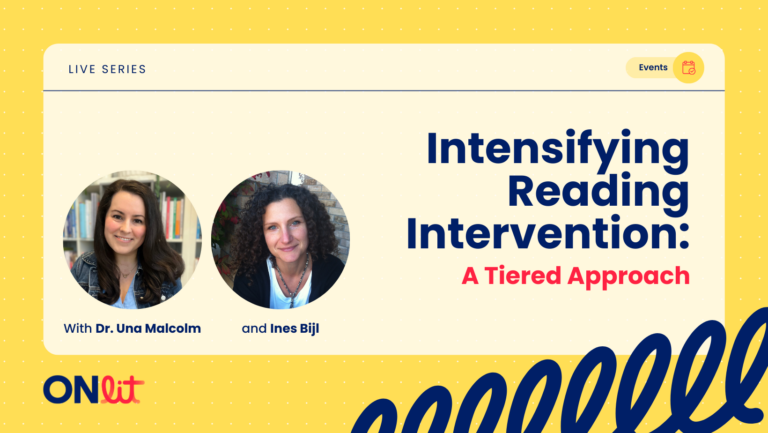
Intensifying Reading Intervention: Session Recordings
This series explores how strong core instruction lays the essential foundation for all readers, while recognizing that some students will still require intensified support through tier 2 and tier 3 intervention. Hosted by Ines Bijl and Dr. Una Malcolm, the series examines what it means to provide meaningful intervention beyond the core, and how educators…
-
Kindergarten – Flow of the Day: Structured Literacy and Play
This poster outlines two ideas of how to structure the day in a kindergarten classroom. Flow of the day considerations and reflective questions are also included.
-
-
-