
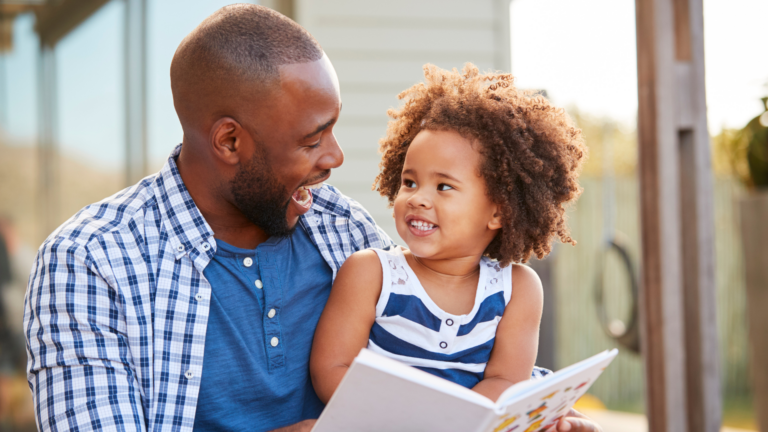

Oral language is the foundation of early literacy. Long before children can read and write independently, they develop language through conversations, listening, gestures, and shared thinking with others. James Britton (1970) captured this idea well when he wrote, “writing floats on a sea of talk.” In kindergarten classrooms, rich talk helps children build vocabulary, thinking and communication skills that support later reading and writing skills.
The Ontario Kindergarten Curriculum (2026) places oral language at the centre of early literacy through Overall Expectation A1: Oral and Non Verbal Communication. This strand highlights the many ways children communicate with others and develop language through interactions.
Kindergarten 2026 Curriculum Expectations
- A1.1 Listen and respond – Children listen to others and respond in a variety of contexts and for different purposes.
- A1.2 Use language conventions and non verbal communication – Children communicate ideas using gestures, tone, facial expressions, and appropriate language structures.
- A1.3 Understand and use new words and develop morphological awareness – Children expand their vocabulary and begin to understand how words work and change.
Together, these expectations highlight that oral language includes listening, understanding, vocabulary development, gestures, and participation in meaningful conversations.
Oral Language
Oral language refers to the ability to listen, understand, and communicate their ideas using spoken words and non-verbal cues such as gestures, facial expressions, and tone. It includes vocabulary knowledge, sentence structure (syntax), grammar, and conversational skills.
In Kindergarten classrooms, oral language develops through play, inquiry, direct explicit instruction, storytelling, and everyday interactions with peers and educators. When children explain how they build a structure, negotiate roles in dramatic play, or retell a story in their own words after a read-aloud, they are strengthening the language skills that will later support reading and writing.
Providing kindergarten students with a variety of language experiences helps them organize their thinking, describe their ideas, and make connections with others. This makes oral language both a communication skill and a key tool for learning.
Within the other three strands of the Kindergarten Curriculum, oral language plays an integral part. In Problem Solving and Innovating, children use language to explain their thinking, ask questions, and describe how they solved a problem. In Belonging and Contributing, conversations help children build relationships, share ideas, and participate in collaborative play. Language allows children to express feelings, negotiate conflicts, and communicate their needs in the Self-Regulation and Well-Being strand. To explain their mathematical thinking, students need to develop strong oral language skills. When educators intentionally support oral language development, they strengthen learning across the entire kindergarten curriculum.
Key Changes in the 2026 Curriculum
The 2026 Ontario Kindergarten Curriculum builds on the play-based foundation established in the 2016 Kindergarten Program, which recognized that oral language is central to literacy and learning. However, the new curriculum introduces a clearer emphasis on explicit teaching of language structures.
In the Key Changes Document, it states that, “The curriculum introduces the use of explicitly taught language conventions, including grammar, sentence structure, and vocabulary.”
This change signals that while conversations and play remain essential, educators need to be more intentional in explicitly drawing students’ attention to how language works. The curriculum also highlights the importance of vocabulary development and morphological awareness, which refers to understanding how words are built and how word parts can change meaning.
This shift to more explicit teaching reflects years of research that highlight the importance of vocabulary in literacy development. Developing vocabulary routines, such as those modeled by Anita Archer, and using tools like Frayer Models to reduce student cognitive load by presenting new vocabulary in a consistent manner, will support students in learning new vocabulary and ultimately support oral language development and comprehension.
Effective Instruction in Oral Language
Strong oral language instruction grows from thoughtfully planned lessons, explicit teaching, and intentional interactions with children. Research suggests that children benefit from extended conversations with adults who ask open questions, expand on children’s ideas, and introduce new vocabulary. In the book Strive for Five, Tricia Zucker and Sonia Cabell recommend aiming for at least five conversational turns during interactions with children. These interactions can be scaffolded up or down to meet the child where they are.
Play-based learning provides opportunities for these types of conversations. For example, during play at the block centre, dramatic play, inquiry, or outdoor learning, educators can model new vocabulary and encourage children to explain their thinking by rephrasing what the child said, asking questions, and building on a child’s thinking.
For example, during play at the block centre, an educator might say, “I notice your tower is very tall. The bottom is wide, which helps it stay stable. That wide part is called the base of the structure. Can you tell me how you built the base?” In this interaction, the educator introduces precise vocabulary while supporting the child in describing their thinking.
Read-aloud experiences also provide opportunities to highlight how language works. Educators might draw attention to vocabulary, morphology, and comprehension strategies through teacher think-alouds. These brief discussions help children notice patterns in language and strengthen their understanding of words.
What Oral Language Looks Like in Practice
In a language-rich kindergarten classroom, educators intentionally create opportunities for children to listen, speak, and participate in meaningful conversations throughout the day.
Some observable practices include:
- Extending conversations – Educators ask open questions and encourage children to explain their thinking.
- Modeling rich vocabulary – Adults introduce precise and interesting words during everyday learning experiences – think tier 2 vocabulary.
- Encouraging peer conversations – Children are supported in sharing ideas, responding to peers, and collaborating during play and inquiry.
- Drawing attention to how language works – Educators highlight rhymes, word endings, and word parts during stories and classroom conversations.
- Creating language-rich play environments – Dramatic play areas, inquiry centres, and collaborative activities encourage discussion and storytelling.
- Documenting children’s language use – Educators record observations, quotes, and examples of children’s communication during learning experiences.
Final Thoughts
The new Ontario Kindergarten Curriculum reinforces an important message for educators: strong oral language development is essential for literacy learning. Kindergarten students are capable of learning complex skills and ideas when they are taught explicitly and woven into their play based experiences. By creating classrooms rich in conversations, vocabulary, and meaningful interactions, educators help children develop the language skills they need for reading, writing, and learning across the curriculum and throughout the later grades.
