
Providing Reading Interventions for Students in Grades 4-9: What Research Tells Us
This webinar unpacks key recommendations from the IES Practice Guide Providing Reading Interventions for Students in Grades 4 – 9.

This webinar unpacks key recommendations from the IES Practice Guide Providing Reading Interventions for Students in Grades 4 – 9.
In this brief video, Nancy Hennessy shares insights into the elements of comprehension and how educators can facilitate comprehension for students through Structured Literacy instruction.

While Ministry-approved early reading screening tools may not measure comprehension directly, we learn a lot about students’ comprehension with the Oral Reading Fluency subtest. Learn more in this brief video!

Season 3 of Reading Road Trip wraps up with a jam-packed episode featuring Dr. Amanda VanDerHeyden. Kate and Amanda have a wide-ranging conversation about the science of learning and human behaviour – how do children learn new things? From the instructional hierarchy to incremental rehearsal, don’t miss this fabulous episode!

The Instructional Hierarchy is a model of skill acquisition. The hierarchy has been researched for decades – when we learn something new, we move through a series of predictable stages. Educators need to be aware of the instructional hierarchy since we are most effective when our instruction matches the student’s current level of proficiency. Learn…
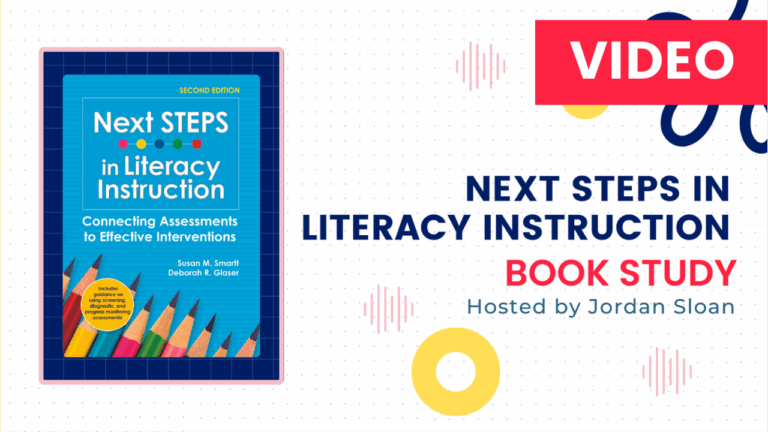
Keen to learn more about using assessment to drive structured literacy in your classroom? Catch up with our Next STEPS Summer Book Study. Resources related to this ONlit event series, hosted by Jordan Sloan, can be found here. Each session in the series tackles a foundational reading skill, unpacking what it is, why it’s necessary for…

Cette liste orthographique, provenant du Québec, peut servir de guide afin de sélectionner des mots à étudier pour chaque niveau scolaire. Ces mots peuvent provenir de l’ensemble des disciplines, de listes reconnues, de thèmes traités en classe ainsi que des besoins et des champs d’intérêt des élèves.

Dr. Michèle Minor-Corriveau présente les facteurs à considérer lorsqu’on intervient pour développer les habiletés de conscience phonologique chez les élèves aux cycles moyen et intermédiaire.

La lecture répétée est une méthode d’enseignement qui s’appuie sur de nombreuses recherches. Découvrez comment utiliser la lecture répétée dans votre class pour améliorer la fluidité des élèves grâce à ce guide de mise en oeuvre du Dr Stephanie Stollar.

The chapters in this anthology, by a range of expert authors, delve into the relationship between writing and reading (as well as oral language), offering both extensive research and ideas for practice. While the research can be a bit heavy at times (this is not a « quick tips to use tomorrow » kind of book), there…
Grammar on the Go is a playlist of some foundational grammar concepts covered in the new Ontario Language Arts Curriculum (2003) for Grades 1-9. The video series focuses on nouns (common, proper, singular, plural), verbs (past, present, future, progressive, perfect tenses), pronouns (first person, second person, third person), gerunds, adjectives (common, proper, comparative, superlative, pronoun…

This structured journal template, based on the work of David Liben and Meredith Liben, can be used to introduce students to the use of structured journals in their close reading of texts. While this work can be started orally with younger students, this template will be best-suited for Grades 3 and up. Before using this…